
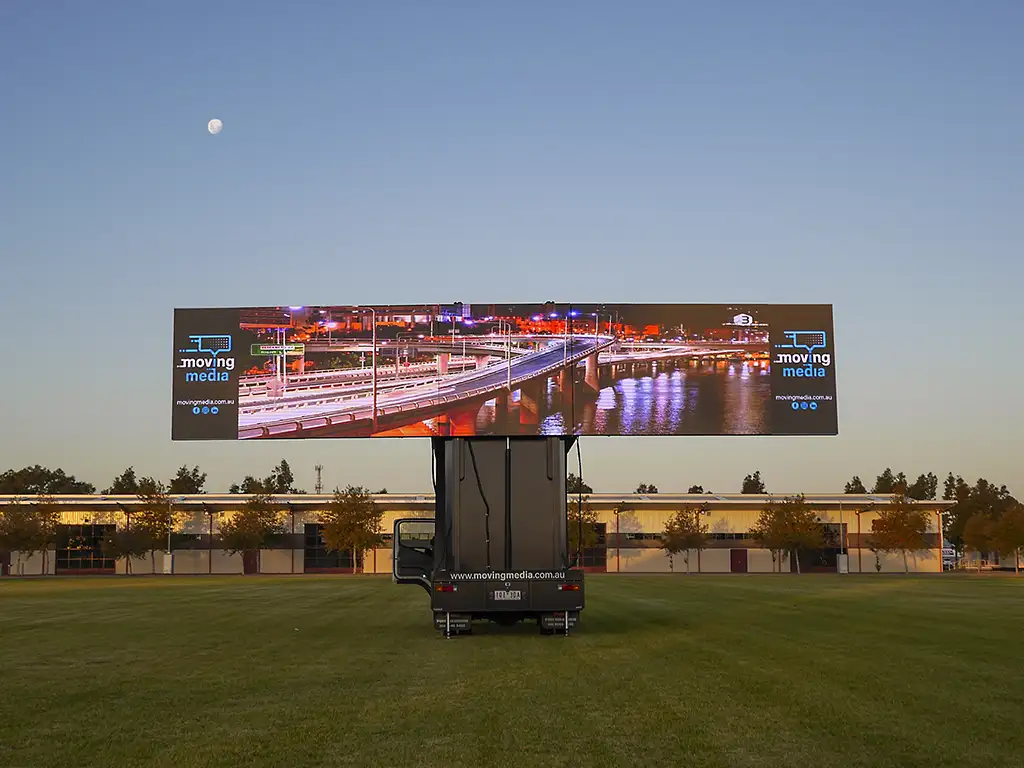
A brand rarely sticks because someone glimpsed it once. It sticks because the right people saw the right cues, in the right places, often enough to remember them later. That is the real work of mobile branding, and it is exactly where a mobile truck billboard proves its worth. When mobile advertising travels through the streets your customers already use, your logo, colours and message stop reading as background clutter and start becoming familiar, and familiarity is what eventually turns into recognition and trust.
The gap between being seen and being remembered is enormous, and it is the gap most outdoor campaigns quietly fall into. Understanding why moving branding behaves so differently from a poster that stays put is the first step to building a campaign people actually recall.
Mobile Branding Is About Memory, Not Just Exposure
Advertising and branding are often treated as the same thing, yet they pull in different directions. Advertising pushes a single offer at a moment in time. Branding builds a durable memory: the association a person forms between a name, a look and a feeling. A mobile truck billboard sits neatly at the meeting point of the two. It delivers a timely message through mobile advertising while repeating the consistent visual cues that mobile branding depends on.
That repetition matters because memory is built through pattern, not through volume. Seeing one enormous ad a single time does far less for recall than seeing a coherent, well-designed brand cue several times across a week. A truck that circulates through the same corridors, events and suburbs gives your brand the repeated, low-friction exposure that quietly cements recognition.
The reinvention of the format has made this easier than ever. The move from printed vinyl to programmable digital screens, explored in depth in our guide to how digital mobile advertising trucks reinvent mobile billboard truck advertising, means the same vehicle can now carry consistent branding while still rotating fresh creative on demand.
Why Movement Makes a Brand Stick
Human attention is wired to notice change. A stationary billboard blends into a familiar streetscape within days, but a moving screen enters the field of view, grabs a glance and then leaves, which is precisely the kind of novelty the brain flags as worth noticing. That is not marketing folklore. Motion-based outdoor creative is roughly 81% more effective at capturing attention than static formats, which gives a mobile truck billboard an inbuilt advantage before a single word is read.
Movement also solves the location problem that limits fixed panels. Instead of waiting for an audience to pass a hoarding, the truck goes to where the audience already is: outside a stadium before kickoff, along a beachfront on a hot Saturday, or through a shopping precinct at lunchtime. Each of those settings adds context to the branding, and context is what makes a message feel relevant rather than generic.
The Cues That Make Mobile Branding Memorable
Powerful mobile branding is disciplined branding. A moving screen gives a viewer only a few seconds, so every element has to earn its place. The brands that stick tend to hold to a few simple rules.
- One idea per screen: Crowd the display and you lose the glance entirely. Simple, single-message creative can lift recall by up to 60% compared with cluttered layouts.
- Consistent brand assets: The same logo, the same colour palette and the same tone, every time. Consistency is what lets a half-second glimpse register as your brand rather than just another ad.
- High contrast and legibility: Colours and types that read clearly from a distance and at speed, in daylight or after dark.
- A single, clear call to action: Tell people the one thing you want them to do, whether that is visit, search or follow.
Treating a mobile truck billboard like a static poster with a little motion added is the most common way to waste its power. The medium rewards restraint, and restraint is what keeps a brand recognisable across every route it travels.
Frequency Turns a Single Sighting Into Recall
Outdoor is already one of the most memorable channels available. The Out of Home Advertising Association of America reports an ad recall rate of 84 to 86% for out-of-home, close to double the recall of typical online and social ads. Mobile advertising takes that high-recall medium and adds the one thing a fixed billboard cannot offer: control over how often, and where, your audience meets the brand.
That control is what builds effective frequency. Rather than hoping the same commuters happen past one panel, a planned route can pass your core audience several times across a shift, and across several suburbs in a single day. The table below shows how the two approaches compare for a brand focused on recall.
| Branding factor | Fixed billboard | Mobile truck billboard |
|---|---|---|
| Location | Single set point | Multiple routes and precincts |
| Frequency control | Depends on passing traffic | Planned repeat exposure |
| Message flexibility | Fixed for the booking | Updated remotely mid-campaign |
| Audience targeting | Whoever happens to pass | Chosen suburbs, events and times |
| Recall potential | Strong but static | Strong and reinforced by repetition |
Match the Brand to the Moment
The strongest mobile branding is not only consistent, it is well timed. Because a digital truck can change its creative remotely, you can align the message with the moment your audience is most receptive. A coffee brand can lead with breakfast messaging on a morning route and switch to an afternoon offer by lunch, all under the same visual identity.
That timing has a measurable payoff. Research into digital billboard advertising found that 74% of mobile users take some action, such as searching, calling or visiting a store, after seeing a digital billboard ad. When your branding reaches people close to the point of a decision, in a suburb they are already shopping in or outside an event they are already attending, the distance between seeing your brand and acting on it shrinks dramatically.
Proving Your Branding Actually Landed
Branding used to be the hardest to justify because its value felt intangible. Modern mobile advertising has changed that. With Moving Media’s Mobilytics measurement platform, a campaign reports live impressions, audience heat maps and route performance, so you can see where your brand was seen, when exposure peaked and which routes delivered the densest audience. Digital retargeting options then let you follow up online after the vehicle has moved on.
For a branding campaign, that data answers the question that used to be unanswerable: did the right people see it, often enough, in the right places? Being able to prove delivery turns mobile branding from an act of faith into a decision you can measure, refine and repeat.
Mobile Branding Mistakes That Quietly Kill Recall
Even a well-funded campaign can fail to stick if the fundamentals slip. The most common pitfalls are easy to avoid once you know them.
- Overloading the screen: Too much copy means nothing is remembered.
- Inconsistent identity: Changing logos, colours or tone across a run erases the repetition that recall depends on.
- Ignoring the route: Brilliant creativity on the wrong streets simply reaches the wrong people.
- Forgetting the call to action: Recognition without direction leaves value on the table.
- Measuring nothing: Without data, you cannot tell a strong route from a weak one, so you keep repeating the same guesses.
Sidestep these and a mobile truck billboard becomes one of the most dependable branding tools in the mix.
Put Your Brand on the Move
A brand does not stick by accident. It sticks through consistent cues, smart placement and enough well-timed exposure to build a memory. Mobile advertising gives your branding the movement, frequency and context that fixed formats cannot, and a digital mobile truck billboard packages all three into a single, measurable channel.
If you are planning a launch, an event or a local push, treat your branding as something to be seen often and proven, not simply displayed. Talk to Moving Media for a free, no-obligation consult and a clear, upfront quote, and put your brand exactly where your customers already are.
Frequently Asked Questions
What is the difference between mobile advertising and mobile branding?
Mobile advertising is the delivery of a message through a moving medium such as a truck-mounted screen, while mobile branding is the longer-term work of building recognition and trust through consistent visual cues. On a mobile truck billboard the two work together: advertising carries the timely offer, and branding makes sure people remember who it came from.
How does a mobile truck billboard help a brand stick in people’s memory?
It combines movement, repetition and context. Motion captures attention, planned routes deliver repeated exposure across suburbs and events, and consistent branding turns each brief sighting into recognition. Together these build the kind of recall that a single fixed billboard struggles to achieve.
Is mobile branding suitable for small and local businesses?
Yes. Because routes can be tightly targeted to a single suburb or venue, a local business can build strong recognition in exactly the area it serves, without paying for wasted regional reach. It is a cost-effective way to become the familiar name in your own patch.
Can I change my branding or message during a campaign?
With a digital mobile truck billboard, yes. Creative lives on the screen rather than on printed vinyl, so messages can be refreshed remotely mid-campaign. You can rotate offers or react to timing while keeping your core brand identity consistent throughout the run.
How do I know if my mobile branding campaign is working?
Modern platforms track live impressions, audience heat maps and route performance, so you can see where and when your brand was seen. That measurement lets you pinpoint your strongest routes and times, then optimise future runs rather than relying on guesswork.
