
There was a time when outdoor advertising felt easy to understand. A brand picked a visible spot, paid for a fixed period, and trusted that passing traffic would translate into exposure. Pricing followed a simple logic: better roads meant higher cost, and longer bookings meant better value. That simplicity no longer reflects how outdoor advertising works today. Audience movement has become fragmented. People split attention between physical environments and digital screens.
As a result, advertisers now expect proof, not assumptions. Pricing has shifted accordingly. It no longer reflects just where an advertising billboard stands, but also how effectively it performs. At Moving Media, we often see confusion when two placements that appear similar deliver completely different outcomes. The reason lies in what pricing now represents: behaviour, timing, and measurable interaction.
When Pricing Was Based on Position Alone
Traditional billboard valuation relied heavily on geography. If a site sat on a well-known road or within a busy area, it commanded a higher rate. That model still exists, but it overlooks an important reality: traffic patterns are no longer stable.
Daily flow can fluctuate due to:
- Remote work trends
- Construction disruptions
- Weather conditions
- Local events
When pricing stays fixed but audience behaviour changes, performance becomes inconsistent. A premium location does not guarantee consistent exposure.
Rethinking What You’re Really Paying For
Modern campaigns are evaluated differently. Instead of focusing only on placement, brands now prioritise context and outcomes.
Common considerations include:
- Who is present during specific time windows?
- How long does the audience remain within view?
- Can the campaign adapt mid-flight?
- What data will confirm performance afterwards?
These questions shift the definition of value. Pricing is no longer based on estimated traffic; it reflects a verified opportunity.
The Hidden Variable Behind Campaign Performance
Location still matters, but timing often determines the real impact. A busy intersection during peak commuting hours behaves very differently from the same space at midday.
Campaign value now fluctuates based on:
- Morning and evening commuter peaks
- Retail activity cycles throughout the week
- Event-driven surges in foot traffic
Mobile formats enable campaigns to align with these patterns, ensuring exposure when audience density is highest.
The Shift From Being Seen to Being Considered
The quality of attention matters more than the quantity of impressions. Exposure in a high-intent environment, such as near retail or event spaces, can outperform larger but less engaged audiences.
Pricing increases when:
- People remain within view longer
- The same audience sees the message repeatedly
- The message appears close to decision-making locations
This shift reflects a broader goal: outcomes over visibility.
The Structural Shift Behind Market Growth
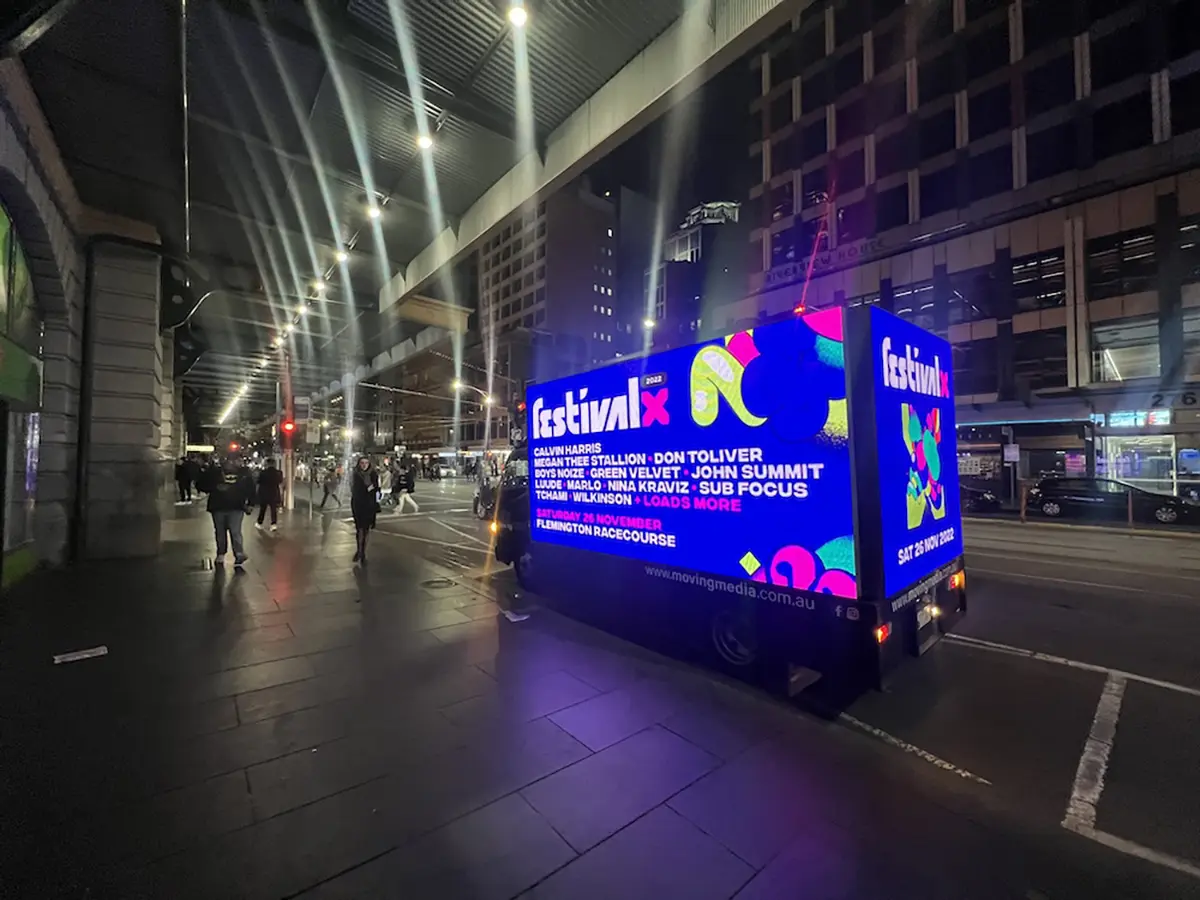
The difference between fixed and mobile formats is not just physical, it’s structural. Static placements charge for presence in a location, regardless of how that location performs at any given time. Mobile formats operate differently. They align campaigns with movement patterns, adjusting routes and timing to maximise exposure. This distinction is reflected in market growth.
The global outdoor advertising industry is projected to rise from $41.2 billion in 2025 to $78.1 billion by 2030, with digital and mobile formats leading expansion. The mobile digital billboard advertisment segment alone reached $32.5 billion in 2024 and is expected to grow to $78.4 billion by 2034, driven by a 9.2% CAGR. This trend shows that advertisers are prioritising adaptability and performance over fixed placement.
How Responsiveness Is Changing Media Value
Outdoor advertising is no longer limited to a single message displayed for weeks at a time. Digital capabilities allow campaigns to evolve continuously.
Advertisers may invest more when the creative can:
- Rotate multiple messages
- Adjust content by location
- Respond to weather or events
- Update calls to action instantly
The ability to respond in real time increases effectiveness, which directly affects pricing.
Measuring What Actually Happens, Not What Might
One of the most significant changes in outdoor advertising is the ability to measure results. Campaigns now generate detailed insights rather than relying on estimates.
At Moving Media, tools like Mobilytics provide visibility into:
- Audience exposure patterns
- Density of people near campaign routes
- High-engagement time periods
- Movement trends across locations
This data allows advertisers to understand not just potential reach but also actual interactions.
The Trade-Off Between Consistency and Impact
Long-term placements often reduce daily cost, but shorter campaigns can deliver concentrated impact. Brands now choose between sustained visibility and targeted bursts depending on their objectives. Mobile and digital formats enable compressing exposure into high-value windows, allowing shorter campaigns to remain efficient while commanding higher rates.
From Printing Budgets to Performance Planning
In the past, a large portion of advertising billboard budgets was tied to printing and installation. Digital formats have reduced these expenses, but introduced new priorities.
Current cost drivers include:
- Route optimisation
- Data analysis
- Campaign monitoring
- Performance reporting
The focus has moved from materials to strategy.
Standing Out in a City That’s Seen It All
Urban environments are increasingly saturated with visual messaging. Simply being present is no longer enough to capture attention. Movement introduces variation. It breaks patterns and attracts notice in ways static structures cannot. As audiences become accustomed to fixed signage, dynamic formats often carry greater perceived value.
Aligning Spend With Real Engagement
Today, billboard advertisment pricing is shaped by how people move, interact, and make decisions, not just by where a sign exists. At Moving Media, campaigns are designed around these behaviours. By combining mobility, timing, and data insights, we help brands align spend with real audience engagement rather than assumptions.
FAQs
Why does billboard pricing feel so inconsistent today?
Modern pricing is influenced by timing, audience density, engagement potential, and measurable exposure rather than location alone. Campaigns that align with high-activity periods and real behavioural patterns tend to deliver stronger results and therefore command higher rates.
If two billboard advertisment look identical on paper, why don’t they perform the same?
Two locations may appear identical geographically but differ in traffic flow, pedestrian presence, and surrounding activity. These factors affect how people interact with the advertisement, which directly influences performance and pricing.
Has data really changed how outdoor advertising is valued?
Not necessarily. While digital formats can have higher upfront costs, they offer flexibility and optimisation capabilities that often improve overall campaign efficiency and return on investment.
Why are some shorter campaigns priced higher than longer ones?
Mobile campaigns are priced based on movement, timing, and exposure windows rather than fixed placement. This creates a clearer connection between spend and audience interaction, making outcomes more predictable.
What changes when advertising starts moving instead of staying still?
Measurement provides evidence of campaign performance. When advertisers can see where and when audiences engage with their message, they gain confidence in results and can make more informed decisions for future campaigns.
